
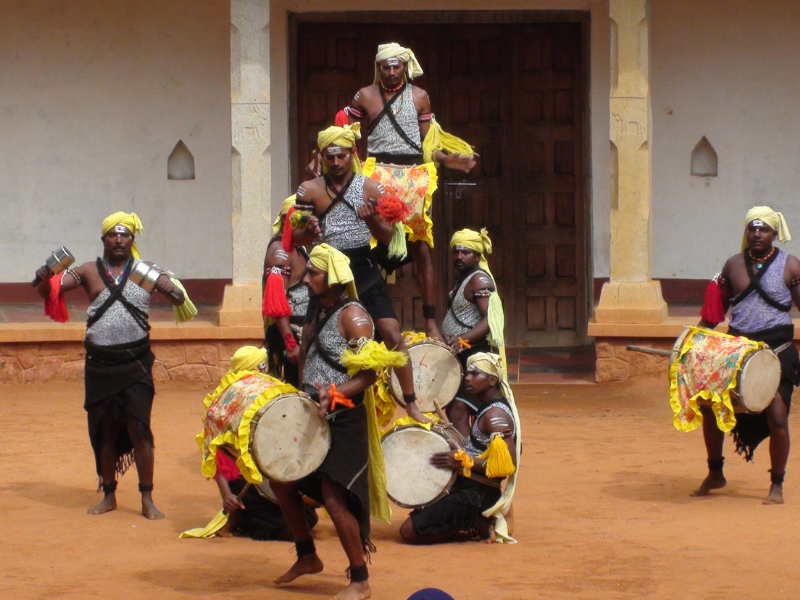
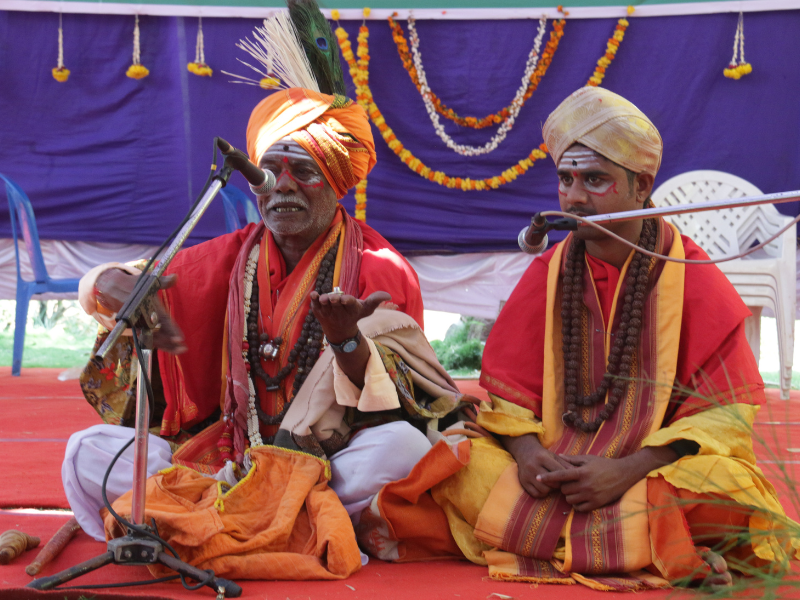
Janapada Loka has been a vibrant center for preserving and promoting Karnataka’s folk culture through live performances and festivals like Lokotsava, which celebrate traditional music, dance, and rituals. It has conducted workshops and training programs, offering hands-on learning in folk arts and crafts. The institution has played a vital role in the revival of dying art forms, supporting endangered traditions and folk artists. By actively engaging with local artisans and performers, Janapada Loka has created a thriving space for cultural exchange, ensuring Karnataka’s rich folk heritage continues to flourish for future generations.
Janapada Loka: A Hub for Folk Art Revival
Mahadwara
The grand entrance, Mahadwara, stands as a striking feature, measuring twenty feet in width and adorned with traditional horns, trumpets, and brass Harige and Nandidwajas. These brass pillars, standing 26 feet tall on either side of the entrance, warmly welcome visitors into Janapada Loka.
Lokamata Mandira
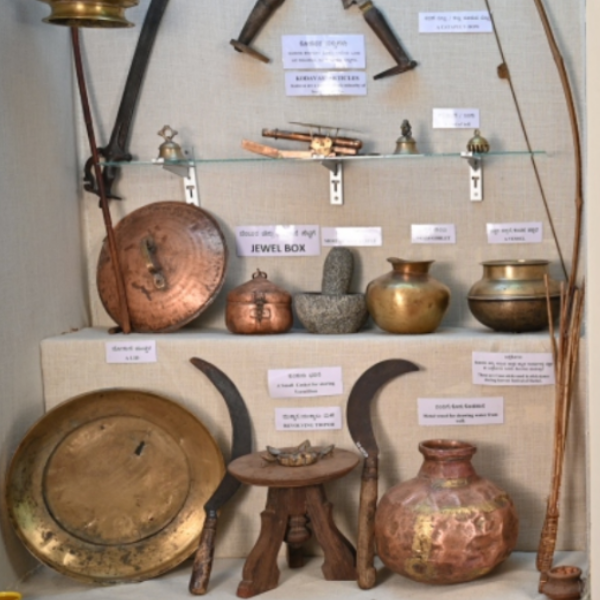
The museum, Lokamata Mandira, showcases the beauty and elegance of rural life, rooted in hard work and tradition. It features a wide range of items used in daily rural life, such as:
- Large grain storage bins.
- Cooking pots and utensils.
- Wooden and iron tools for animal husbandry and agriculture.
The museum’s well-organized display, complete with informative labels, vividly portrays rural life. In front of the Lokamata Mandira stands a life-size statue of the founder, Shri Nadoja H.L. Nagegowda, the visionary behind the creation of the vibrant folk universe of Janapada Loka.
Chitra Kuteera
Chitra Kuteera is a gallery that brings Karnataka’s vibrant festivals, fairs, arts, and customs to life through an extensive collection of black-and-white and color photographs. It also displays:
- Photos of Shri Nagegowda during his efforts to establish Janapada Loka, record folk music, and collect artifacts.
- Personal items, manuscripts, and awards of Shri Nagegowda.
- Photographs of tribal communities, Tenkutittu Yakshagana masks, and folk theater exhibits, capturing the attention of visitors.
Loka Mahal
This spacious, two-story building offers:
- Ground Floor: Life-size dolls depicting rural characters such as Gardi Gombe, Coorgi couples, Dasayya, Goravayya, and performers of tribal and harvest dances.
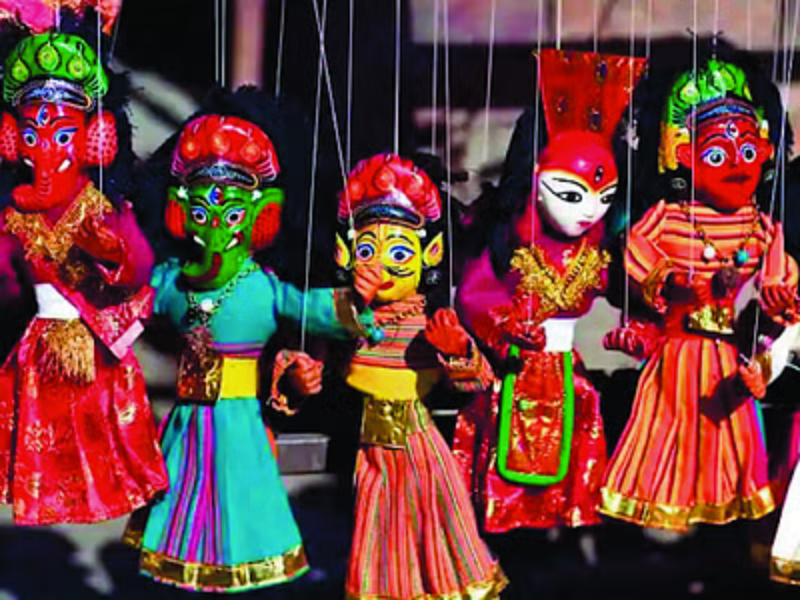
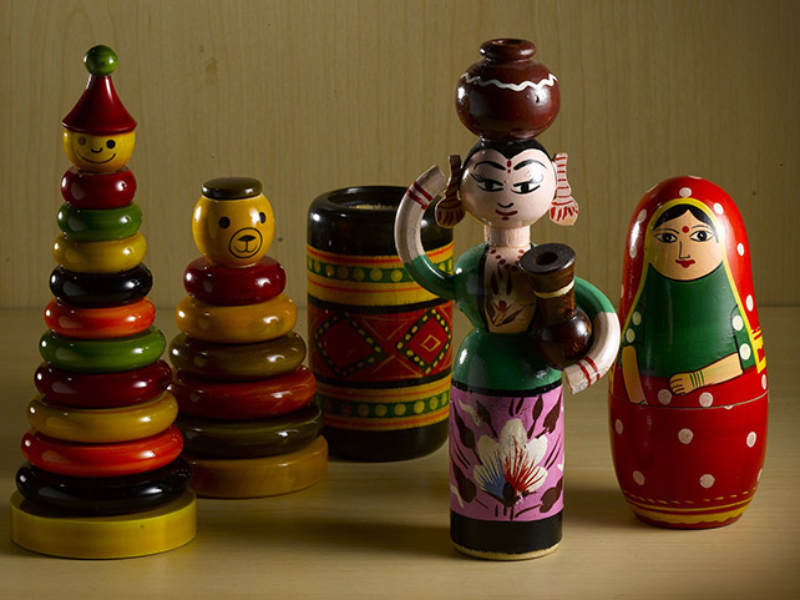
- First Floor: An exhibition of folk instruments, leather puppets (Togalu Gombegalu), string puppets, Ganjeefa playing cards, children’s toys, masks, and other folk theater-related artifacts.
Saraswathi Mandira
Situated on the bank of Loka Sarovara, this building serves dual purposes:
- Ground Floor: A well-equipped library, open to the public on all working days, for in-house reading and research.
- First Floor: A classroom for certificate and diploma courses in folklore studies, also used for seminars and meetings.
Adjacent to Saraswathi Mandira are two furnished rooms available for scholars at a nominal cost.
Aayagara Ramala
This section showcases tools and equipment used in rural trades, including:
- Pottery and smithy tools.
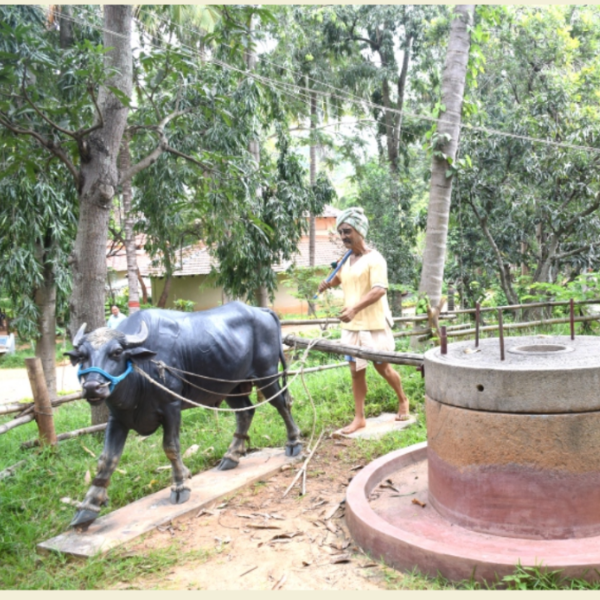
- Wooden sugarcane and oil extractors.
- Kottana (rice-pounding equipment) and agricultural tools.
- Fishing nets, boats, hunting weapons, bullock carts, chariots, and palanquins adorned with beads.
The highlight is a beautifully constructed village house, completing the rural ambiance.
Loka Siri
Another spacious two-story building featuring:
- Ground Floor: Life-size dolls of Mudalapaya Yakshagana artists, Gondaliga, Budabudike, Kinnara Jogi, Goravayya, Soma, and Halakki Vokkaligas.
- First Floor: A collection of folk instruments, leather puppets, rod puppets, and costumes of Badagu Tittu and Tenkutittu Yakshagana artists.
Open-Air Theatre
This impressive Greek-style theater has a seating capacity of 800 people. It comes alive every Sunday with folk art performances. Adjacent to it is a well-equipped green room. The theater has received acclaim from the late B.V. Karanth, one of India’s finest theater directors.
Video Scope Theatre
Located behind the open-air theater, this facility offers comfortable seating and a large screen for viewing videos and documentaries on folk art and culture.
Children's Park
A serene park designed for children aged 2 to 10 years, equipped with play structures and seating for adults, offering a relaxing natural environment for families.
Dodda Mane
This traditional house, featuring twelve pillars and an open central courtyard, is designed to:
- Serve as dormitories for visiting folk artists.
- Host events such as weddings, seminars, and workshops.
Adjacent to the house is a community kitchen for large-scale cooking, along with a spacious hall and a well-maintained lawn.
Janapada Mantapa
A multipurpose hall with a stage, Janapada Mantapa is ideal for lectures, seminars, and cultural functions. It is complemented by two smaller adjacent buildings and an open-air stage set against lush greenery, creating the perfect backdrop for folk performances.
Alasuru Chariot
Once part of the Someshwara Temple in Bangalore, this chariot holds historical significance. Slightly damaged by a fire, it was deemed unfit for rituals. Now restored and preserved, it is showcased for its intricate carvings and artistic beauty.
Loka Sarovara
Loka Sarovara is an enchanting artificial lake spanning approximately one acre. Visitors, especially children, can enjoy pedal boat rides in its serene surroundings
Tribal Village
The Tribal Village, a recent addition to Janapada Loka, was inaugurated with great enthusiasm. This village within the museum complex offers a captivating insight into the rich and diverse tribal cultures of Karnataka. Through meticulously recreated environments and lifelike displays, visitors can now experience the traditional lifestyles, rituals, artistry, and daily activities of various tribal communities. The Tribal Village marks a significant step towards preserving and showcasing the invaluable cultural heritage of these indigenous communities, providing visitors with an immersive and educational experience that fosters appreciation and understanding of their way of life. This unique addition underscores Janapada Loka’s commitment to cultural preservation and education, and its role as a bridge between the past and the present for generations to come. The Tribal Village consists of Halakki- Vokkaliga, Gowli, Male Kudiya, Gonda, Jenukuruba, Kunibi, Iruligas, Kadugollas, Siddi and Soliga communities.
A Folk Library
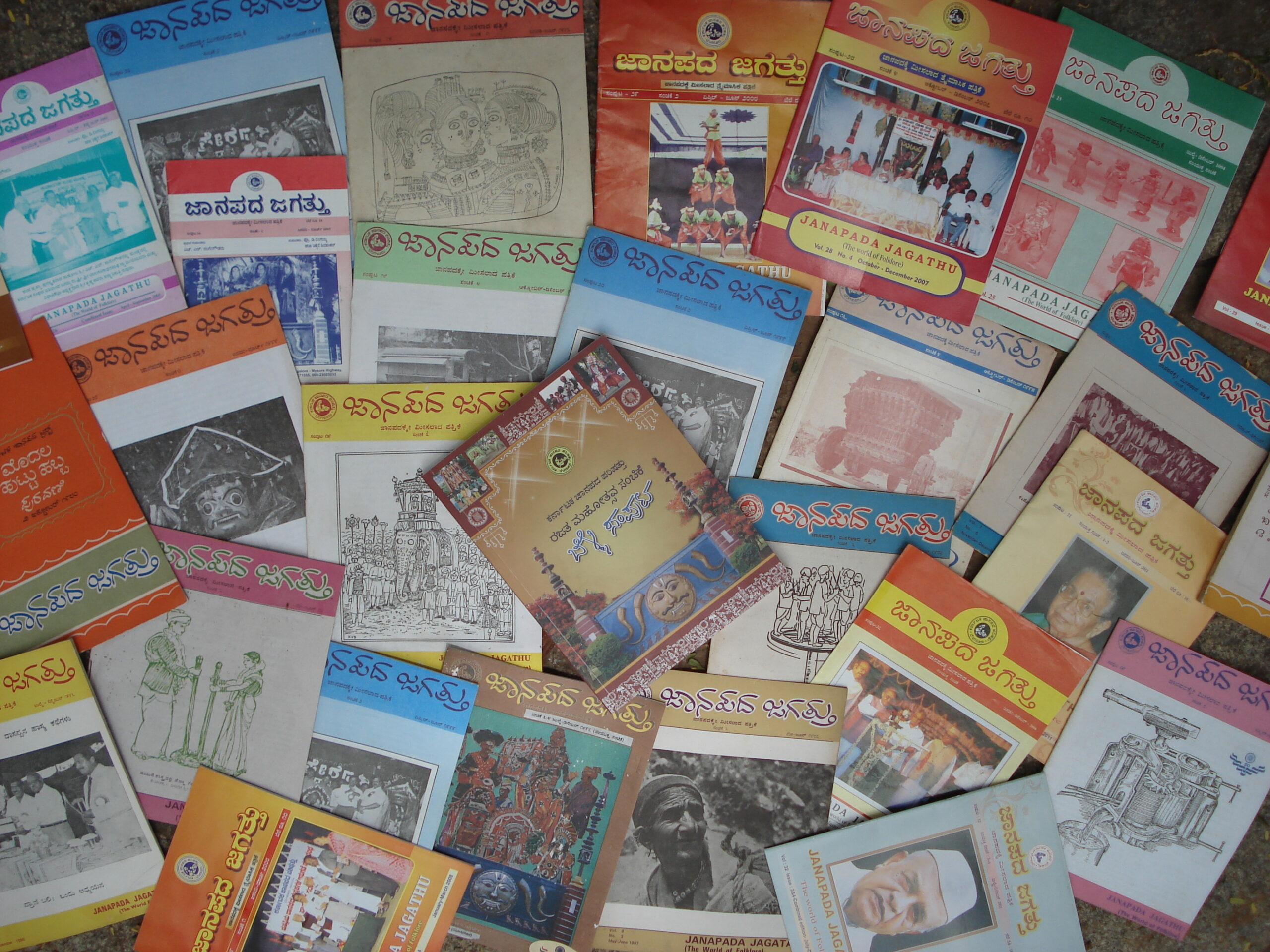
Janapada Library boasts a substantial collection of books used for research. Janapada Mahavidyalaya has been a part of the institution affiliated with Dr. Gangubai Hangal Music and Performance University, Mysore , offering Janapada Diploma Courses. Janapada Loka hosts national cultural events celebrating folk culture throughout the year. Karnataka Janapada Parishath has acted as one of the few organizations to shelter art and it disciples. It has aided in development, practice of the art and the artists. The gate of Janapada loka has invited thousands of artists, and many more audiences to impart knowledge and culture. With modernization of the rural Karnataka taking pace, Janapada Loka has made consistent efforts to house the culture and continue the traditions among the youth of India.
This vibrant collection of exhibits and facilities makes Janapada Loka a living museum of Karnataka’s rich folk heritage.